Category: Sports Entertainment & Tech

  • Cybercrimes and Cyber Laws in Nigeria: All You Need To know

    Cybercrimes and Cyber Laws in Nigeria: All You Need To know

    Nigerians have become cyber-creatures, spending a significant amount of time online. As the digital world expands, so does cybercrime in Nigeria. The necessity to combat these seemingly uncontrollable phenomena gave rise to Cyber Laws in Nigeria.

    Cyber law acts as a shield over cyberspace, preventing cybercrime from occurring. The government is committed to developing and enforcing regulations to combat illicit online activities.


    The “Cybercrimes (Prohibition and Prevention) Act, 2015” has a significant impact on cyber law in Nigeria. This Act creates a comprehensive legal, regulatory, and institutional framework in Nigeria to prohibit, prevent, detect, prosecute, and punish cybercrime.

    The Act also encourages cybersecurity and protection of computer systems and networks, electronic communications, data and computer programs, intellectual property, and privacy rights, as well as the protection of important national information infrastructure.


    What is a Cybercrime?

    Cybercrime is a type of crime that takes place in cyberspace, or in the realm of computers and the Internet. Because our society is evolving towards an information society where communication occurs in cyberspace, cybercrime is now a global phenomenon. Cybercrime has the potential to significantly influence our lives, society, and economy.


    What is Cyber Law? 

    Any law that deals with the internet and similar technology is known as cyber law. Cyber Law is frequently referred to as “Law of the Internet” or “IT Law.” It’s a legal framework for dealing with issues relating to the Internet, computing, Cyberspace, and other associated matters.


    One of the newest aspects of the legal system is cyber law. This is due to the rapid advancement of internet technology. People who use the internet have legal safeguards under cyber law. This applies to both business and common citizens. Anyone who uses the internet should be familiar with cyber laws.


    Intellectual property, contract, jurisdiction, data protection laws, privacy, and freedom of expression are all covered by cyber law. It oversees the distribution of software, information, online security, and e-commerce via the internet. E-documents are given legal validity in the field of Cyber Law. It also establishes a framework for e-commerce and e-filling.


    To put it another way, Cyber law is a legal framework for dealing with cybercrime. Due to the increased use of E-commerce, it is critical that suitable regulatory practices are in place to ensure that no malpractices occur.


    Cybersecurity laws vary a lot from country to country and jurisdiction to jurisdiction. Penalties depend on the nature of offence, and will range from a fine to imprisonment. It is critical for citizens to understand their particular countries’ cyber laws in order to ensure that they are fully informed about all cybersecurity issues.


    Categories of Cybercrime in Nigeria:

    1. Cybercrimes against People:

    Cybercrimes against people include cyber harassment and stalking, e-mail phishing, the dissemination of child pornography, various sorts of spoofing, credit card fraud, human trafficking, identity theft, and online connected libel or slander.


    One of the most serious Cybercrimes nowadays is the trafficking, distribution, publishing, and dissemination of obscene material, such as pornography and indecent exposure. The potential harm to humanity from such a crime cannot be overstated. If not managed, this is one cybercrime that threatens to impair the progress of the younger generation as well as leave irreparable scars and injuries.


    Correspondingly, in Nigeria prior to the gruesome murder of Cynthia Osokogu in July 2012, as reported by an online news magazine, people had suffered a similar fate. For example, Uzondu, an undergraduate student at a private Christian university in Ogun State, allegedly contracted the dreaded Human Immune Virus, HIV, from a man she thought was her boyfriend.


    The victim met the con man on the famous social networking platform, Facebook, and before she knew it, she was whisked away to a fantasy holiday where she was lavished with expensive presents such as an iPad and the latest BlackBerry phone, among other things. During these amorous outings, the young girl became pregnant, but her partner was nowhere to be found. Unfortunately, she has no idea who the man was, no contact information, and no place of employment. Worse still, she tested positive for HIV.


    1. Cybercrime against property

    The second type of cybercrime is cybercrime against all types of property. Distributed Denial of Service (DDoS) attacks, hacking, virus transmission, cyber and typosquatting, computer vandalism, copyright infringement, and Intellectual Property Right (IPR) breaches are examples of these crimes.


    1. Cybercrime against the Government:

    The third category of cybercrime is cybercrime against the government. When a cybercrime is committed against the government, it is considered an attack on the sovereignty of a nation and an act of war. Hacking, gaining access to confidential information, cyber warfare, cyber terrorism, and the use of pirated software are all examples of cybercrime against the Government.


     The expansion of the Internet has revealed that the channel of Cyberspace is being used by people and groups to threaten foreign governments as well as intimidate a country’s citizens. When an individual hacks into a government or military-run website, the offense becomes terrorism.


    Most of these types of cybercrimes have been addressed by the Cybercrimes Act of 2015.


    Cybercrimes (Prohibition and Prevention) Act, 2015

    The Act provides an effective, unified and comprehensive legal, regulatory and institutional framework for the prohibition, prevention, detection, prosecution and punishment of cybercrimes in Nigeria.


    Cybercrimes highlighted under this ACT include:

    •     Offences against critical national information infrastructure
    •     Hacking Computer Systems and Data Alteration
    •     Unauthorized Access of Protected Systems
    •     Illegal Registration of Cybercafé or Usage of Unregistered Cybercafé
    •     System Interference
    •     Interception of electronic messages, email, electronic money transfers
    •     Tampering with critical infrastructure
    •     Willful misdirection of electronic messages
    •     Unlawful interceptions
    •     Computer related forgery
    •     Computer related fraud
    •     Theft of Electronic Devices
    •     Unauthorised modification of computer systems, network data and system interference
    •     Publishing False Digital Signature and Certificates
    •     Cyber terrorism
    •     Exceptions to financial institutions posting and authorised options
    •     Fraudulent issuance of e­‐instructions
    •     Tampering with Computer Source Documents
    •     Identity theft and impersonation
    •     Child pornography and related offences
    •     Cyberstalking
    •     Cybersquatting
    •     Racist and xenophobic offences
    •     Attempt, conspiracy, aiding and abetting
    •     Importation and fabrication of e-­tools
    •     Breach of Confidentiality and Privacy
    •     Manipulation of ATM/POS Terminals
    •     Phishing, spamming, spreading of computer virus
    •     Electronic cards related fraud
    •     Use of fraudulent device or attached e­‐mails and websites


    Administration and Enforcement Cyber Law in Nigeria

    Under the 2015 Cybercrime Act, the National Security Adviser’s office serves as the coordinating body for the security and enforcement authorities. The Attorney-General of the Federation reinforces and improves Nigeria’s existing legal frameworks regarding cybercrime.


    All law enforcement, security, and intelligence agencies develop the institutional capacity necessary for the effective implementation of the provisions of the 2015 Cybercrime Act, and in collaboration with the Office of the National Security Adviser, initiate, develop, or organize training programs for officers charged with cybercrime on a national or international level.


    Establishment of the Cybercrime Advisory Council

    To Coordinate Cybercrime Act 2015, there was established a Cybercrime Advisory Council (in this Act referred to as “the Council”) incharge of handling issues relating to the prevention and combating of cybercrimes, cyberthreat, computer-related cases and the promotion of cybersecurity in Nigeria.


    The Cybercrime Advisory Council comprises of a representative each of the following Ministries, Departments and Agencies­ –

    (a)  Federal Ministry of Justice;

    (b)  Federal Ministry of Finance;

    (c)    Ministry of Foreign Affairs;

    (d)  Federal Ministry of Trade and Investment;

    (e)  Central Bank of Nigeria;

    (f)    Office of the National Security Adviser;

    (g)  Department of State Services;

    (h)  Nigeria Police Force;

    (i)    Economic and Financial Crimes Commission;

    (j)    Independent Corrupt Practices Commission;

    (k)   National Intelligence Agency;

    (l)    Nigeria Security and Civil Defence Corps;

    (m) Defence intelligence Agency;

    (n)   Defence Headquarters;

    (o)  National Agency for the Prohibition of Traffic in Persons;

    (p)  Nigeria Customs Service;

    (q)  Nigeria Immigration Service;

    (r)   National Space Management Agency;

    (s)   Nigerian Information Technology Development Agency;

    (t)    Nigerian Communications Commission;

    (u)  Galaxy backbone;

    (v)   National Identity Management Commission;

    (w)  Nigeria Prisons Service;

    (x)    One representative each from the following:

    (i) Association of Telecommunications Companies of Nigeria;

    (ii) Internet Service Providers Association of Nigeria;

    (iii) Nigeria Bankers Committee;

    (iv) Nigeria Insurance Association;

    (v) Nigerian Stock Exchange;

    (vi) Non-Governmental Organization with Focus on Cyber Security.


    What is the Importance of Cyber Laws in Nigeria?

    Cyber law is important for organizations that are exposed to risk as a result of an inefficient cybersecurity system. These laws apply to all forms of corporate organizations and digital systems that do business on a daily basis. Each organization adheres to unique cybersecurity guidelines, cybersecurity legislation, cybersecurity policies, and legal issues regulations.


    The following points demonstrate the significant importance of cyber law in Nigeria:

    •     It establishes the parameters for all acts and reactions in Cyberspace.
    •     All online transactions are guaranteed to be safe and protected.
    •     Cyber law enforcement officials monitor all internet activity.
    •     Protection for all data and property of individuals, organizations, and Government
    •     Contributes to the elimination of unlawful cyber activity through due diligence
    •     All activities and reactions carried out in any cyberspace have a legal component.
    •     Maintains a database of all electronic records
    •     Contributes to the establishment of electronic governance


    The main reasons why cyber laws are essential to Nigeria Businesses are:

    1. Employees Safety: When a business is protected by cyber laws, its employees are safeguarded from potential cyberattacks.


    1. Business protection: When it comes to protecting a business, cyber laws are important. This ensures that employees of an organization can browse the internet without fear of being attacked. Due to cyber laws, a company can send and receive important and vital data between networks.


    1. Personal Data Protection: Cyber laws protect a user’s personal information. Numerous threats exist in the digital world; cyber laws aid in the confidentiality and protection of personal and sensitive information communicated over the internet.


    The Notable Areas of Cyber Law in Nigeria

    Cyber laws serve a lot of purposes. Some laws safeguard people from becoming victims of crime as a result of unethical internet activities. Other laws establish guidelines for how individuals and businesses may use computers and the internet. These laws cover a diverse range of issues and activities, but they all fall under the umbrella of cyber law. The following are the primary areas of cyber law:


    1. Fraud

    Cyber laws are relied on by consumers to safeguard them against online fraud. There are laws in place to protect against identity theft, credit card theft, and other financial crimes committed online. A person who steals someone else’s identity may face federal or state criminal penalties. A victim may also file a legal suit against them. Cyber lawyers work to prosecute and defend against charges of internet fraud.


    1. Copyright

    The internet has made it easier to violate intellectual property rights. Copyright infringement was as simple as clicking a button on a file-sharing website in the early days of online communication. Individuals and businesses both require attorneys to pursue actions to enforce copyright protections. Copyright infringement is a branch of cyber law that protects individuals’ and businesses’ rights to benefit from their creative works.


    1. Defamation

    Many people use the internet to express themselves. When people use the internet to spread false information, it can cross the line into defamation. Defamation laws are civil laws that protect individuals from false public remarks that can harm a company’s or an individual’s reputation. When people use the internet to express statements that contravene civil laws, this is considered cyber law.


    1. Stalking and Harassment

    Online statements can sometimes breach criminal statutes that ban harassment and stalking. When someone posts frequent or threatening claims about another individual online, they may be breaking both civil and criminal laws. When stalking occurs via the internet or other kinds of electronic contact, cyber lawyers both prosecute and defend the victim.


    1. Freedom of Expression

    Freedom of expression is an important aspect of cyber law. Even while cyber laws restrict certain online acts, freedom of speech rules allow people to express themselves. Cyber lawyers must advise their clients on the boundaries of free expression, especially laws prohibiting obscenity. Furthermore, cyber lawyers may defend their clients if there is a disagreement over whether their conduct constitute permissible free speech.


    1. Trade Secrets

    Companies that conduct business online frequently rely on cyber law to safeguard their trade secrets. Google and other internet search engines, for example, spend a significant amount of effort building the algorithms that provide search results. They also devote a significant amount of work to developing other features such as maps, intelligent assistance, and airline search services, to mention a few. Cyber lawyers assist their clients in taking legal action as needed to preserve their trade secrets.


    1. Employment and Contract Law

    You have violated cyber law every time you click a button that states you agree to the terms and conditions of using a website. Contracts safeguard individuals and businesses when they utilize technology and conduct business online. Non-compete clauses in employment contracts, for example, used to affect only a small, local geographic area. As more businesses conduct their operations online, the method lawyers design these agreements and courts enforce them may alter. Lawyers must try to represent their clients’ best interests in areas of law that may still be unresolved.


    1. Patents.

    In most cases, patents are utilized to protect an invention. These are commonly used on the internet for two reasons. The first category is for new software. The second category is for novel online business methods.


    1. Trademarks and Service Marks

    Trademarks and service marks are used in the same way in the online and offline worlds. Websites will be protected by trademarks. Service marks are provided for websites that offer services.


    1. Domain Name Disputes

    Domain disputes are specifically about who owns a web address. For example, the person in charge of a website may not be the person who owns it. Furthermore, because domains are inexpensive, some people purchase multiple domains in the hopes of making a large profit.


    1. Contracts

    Most people believe that contracts do not apply online. This is not true. When you sign up for a website, for example, you normally have to agree to terms of service. This is actually a contract.


    1. Privacy

    Online businesses must protect their customers’ privacy. The specific law may differ depending on your industry. As more information is exchanged via the internet, these laws become more crucial.


    1. Data Retention

    In the internet age, data handling is a top priority. Litigation is one area where this has become a major issue. It is becoming typical in litigation to obtain both electronic and physical records. However, there are no current regulations that mandate electronic records to be kept forever. This is not the case with physical records.


    Trends in Cyber Law

    Topics and questions relating to cyber law are constantly evolving. Lawmakers and business leaders are still debating how individuals and businesses should be allowed to use the internet.


    Every year, the importance of cyber law grows. This is because cybercrime is growing in popularity. To combat these crimes, significant trends in cyber law have emerged. Among these trends are the following:

    •     Regulations that are new and more rigorous.
    •     Retaining and enforcing existing laws.
    •     Enhanced knowledge of privacy concerns.
    •     Cloud Computing
    •     How virtual currency may be a target for cyber criminals.
    •     Usage of data analytics.


    Governments and cyber law enforcement organizations will prioritize raising awareness of these issues in the near future. Cyber lawyers may advocate for their clients by approaching legislators to explain their position and request laws that benefit them. Cyber lawyers are involved in the continuous debate about what laws should be enacted in this area of law.


    Why You Need a Cyber Lawyer in Nigeria?

    Cyber lawyers practice in a wide range of areas and expertise. They work in small, medium, and large businesses. They both work in private practice and for the federal government.


    Cyber Lawyers may practice criminal law or work for an organization that develops and enforces civil laws. They can also work for organizations that enforce cyber laws and assist the public in using the internet safely.


    If a client has a dispute over a cyber contract or domain use, they can turn to their cyber lawyer to help them resolve the issue or navigate related litigation. Because of the jurisdictional issues that may arise in cyber law, lawyers who assist their clients with cyber lawsuits may need to work carefully to develop their case.


    Another crucial role of cyber lawyers is to assist clients to develop best practices for conducting business and personal affairs. For example, a cyber lawyer representing a hospital may assist them in implementing measures to comply with privacy rules while still protecting personal information. Cyber lawyers also assist organizations in maintaining client confidentiality in accordance with federal, state, and local laws.


    Where To Get a Cyber Lawyer in Nigeria?

    At Olisa Agbakoba Legal (OAL), we have skilled and experienced cyber lawyers that can support and provide legal and advisory services.


    Our Cyber lawyers deal with issues of cybercrimes against individuals, companies or the government, and handle cases related to e-commerce, e-contracts and digital signatures, intellectual property rights, cybersecurity, etc.


    Feel free to Contact OAL’s Cyber Lawyers to discuss issues relating to internet technologies and cybercrime in Nigeria.


    Written By: 

    Josephine Uba (Lead Digital Strategist, Olisa Agbakoba Legal)
  • Understanding Commercial and Media Broadcasting Rights in Sports

    Understanding Commercial and Media Broadcasting Rights in Sports

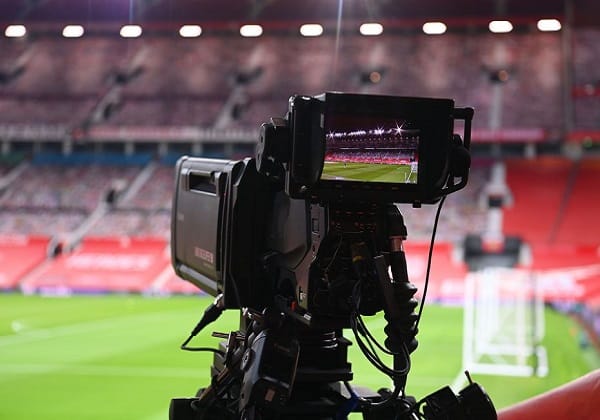
    Broadcasting rights (also known as media rights) are legal rights which a broadcasting organisation owns and negotiates for the purpose of commercial exploitation.


    In sports, copyright and related rights, particularly those relating to broadcasting, underpin the relationship between sport, television and other media. Television and media organisations have been known to enter bidding wars with the winner enjoying the privilege of an exclusive or non-exclusive license to broadcast sporting content. The value of these rights run into the tens of millions in dollars. 


    For top rated sports media organisations, the sale of broadcasting and media licenses represents their biggest source of revenue, generating the funds needed to finance major sporting events, pay wages of elite athletes and players , refurbish stadiums, contribute to the development of sport at grassroots level and more. 


    The world of premier football is a classic example of how high the stakes can go for these exclusive licenses. Through a complex tendering process, broadcasters compete to acquire the rights to broadcast games, and the bigger the game the higher the value to become a broadcaster of European football league games or become the official rights-holder of the competition.


    The English Premier League (“EPL”)  which has always been ahead of other leagues in terms of earnings thanks to its lucrative TV rights in comparison with other leagues operates a centralised distribution model. The EPL has also been known to allocate its incoming revenues generated from TV rights, across all clubs with the aim of creating balance in the competition and avoiding huge financial disparities.


    When the Premier League was formed in 1992, a new playbook emerged proving to be a game changer for the sports media rights landscape and football itself. As previously mentioned, a new profit-driven approach was implemented and became the cornerstone of the organisation.


    1992 marked the starting point of the golden era of sports media rights as the influence of the Premier league grew in the international and domestic media market.  The launch of the Premier League on Sky Sports is what dramatically shifted the proverbial earnings goalpost for many clubs.  One of the major technological developments in the satellite media industry was the introduction of subscription-based broadcasting which used encryption of the satellite signal acting as a turnstile to allow viewers access to content. Technological improvements related to the coverage of the games stood out such as the increased number of cameras installed around the pitch to cover the action from a wide array of TV angles previously unseen.


    Football clubs own their rights however they give the Premier League a mandate to license these rights centrally to potential buyers, usually the highest bidder. The rights ownership and licensing system is governed by the Premier League’s constitution and any change must be approved by two-thirds of the clubs. Some of these rights can be utilised directly by the clubs. The club license agreement defines which rights may be used; however, clubs are not allowed to sell these rights to third parties.


    DSTV as a Sport Broadcaster

    DSTV is a Sub-Saharan direct broadcasting satellite service from South Africa, and the largest operator in Africa, founded in 1995 under the company Multichoice. It owns the rights to broadcast the premier league and a host of other sports in Nigeria and Africa as a whole.


    DSTV boasted 10.26m subscribers as at 2019 according to Statista.com and it is also the broadcast partner of the Nigerian Premier Football League (‘NPFL’) in Nigeria. This deal has ensured that the popular channel ‘SuperSport’ of DSTV will remain the official broadcaster of the NPFL until 2025.

    These rights also extend across the entire broadcast territory of Sub-Saharan Africa, including South Africa, in all languages and through all distribution platforms, including television, internet and mobile.


    Image Rights in Relation to Broadcasting Rights

    In the world of football and sports in general, image rights are the rights intrinsically belonging to a player  to  control, sell, license and in doing so monetise his or her likeness i.e. his or her image, name, nickname, voice, signature and all other characteristics unique to the player.


    At the beginning of a sportsperson’s career, the athlete or player’s image rights are owned by the athlete or player in so far as they cannot be exploited, licensed or assigned without his or her prior consent or until he or she secures the services of a talent manager. Savvy elite international players will license their image rights to three broad categories of licensee (i) their club (ii) their personal sponsors and (iii) national association. In parts of the west, particularly the United Kingdom, the player’s talent manager may advise that a separate business is registered to manage the player’s image rights contracts and receive income.


    Under the NIgerian Premier Football League (NPFL) Rules, a player’s image rights obligations are expressly incorporated in Form 7 of the Rules, specifically in Clause 4.3 through 4.7. Clause 4.3 of the contract is the assignment clause that recognises the club’s rights to exploit the player’s image rights. By clause 4.4, the player agrees not to undertake any promotional activities on the club’s behalf nor assign his image rights to any other person. The player is further obliged under article 4.5 of the contract to undertake promotional activities on behalf of the club. This clause is complemented by clause 4.6 where the player expressly assigns the copyright to his photographs to the club and grants to the club, permission to exploit his image for promotional purposes. However, it is pertinent to point out that the exploitation of a player’s image imposes a corresponding obligation on the club to ensure that such usage is not subjected to any greater usage than that of his teammates.


    The club is also obliged to ensure that the player’s photograph or image does not imply an endorsement by the player of the product or service being promoted. This was the thrust of the dispute between Mohammed Salah and the Egypt Football Federation where the player’s representatives alleged that their client’s image was subjected to greater use vis a vis that of his teammates and gave the impression that the player endorsed the use of Egypt Air.


    The recent case of Real Madrid with La Liga challenging the Spanish soccer body’s authority to commercialise the league’s broadcast rights is instructive for understanding the need for centralised control of broadcasting rights by a league. The Madrid court dismissed the reigning Spanish champions’ legal claim, ruling in favour of La Liga’s centralised rights management and its responsibility to increase the value of the competition domestically and abroad.

    Real Madrid requested that the court make it mandatory for La Liga to provide and prepare thorough financial accounts for the 2018/19 season, including details on the sale of the league’s broadcast rights. In addition, the club wanted the court to reverse certain agreements approved at La Liga’s general assembly in October 2019; while it also claimed it was due a payment of €23.9 million (US$28.9 million) representing its share of payments from the league.


    The court ruling dismissed all those claims. It held that La Liga has an unequivocal role in the commercial management of audiovisual rights and in the exercise of its obligation it is required to guarantee optimal management and investment.


    It is pertinent to note that clubs have traditionally remunerated their players solely for playing football, however with the lines blurred between entertainment and sports, this relationship has evolved and commercial drivers push football further into the entertainment and branding space. With this, clubs are continuously looking for a variety of ways to ‘monetise’ their players and grow their revenue and fan base.


    As such, clubs are entering increasingly into a variety of high value commercial branding partnerships ranging from clothing, aviation, lifestyle, food and beverages,etc due to the high demand for brand association with clubs and their high-profile players. It is a fact that some Premier League clubs have in excess of 60 commercial partners, all seeking the right to use images, which in this case includes DSTV (images includes the use of high-profile players in their advertising).


    To conclude, we look at what we know about the power of brand association and image rights In relation to the story recently reported in social media about Wilfred Ndidi, and the use of his image on huge billboards in Nigeria to announce the incoming new football season. 

    There were several questions about whether DSTV can do this but as we know DSTV is and remains the official broadcast partners of the Premier League in Nigeria and for this reason it presupposes that the organisation may have authorisation to use images of EPL stars in their branding and products. 

    One thing is clear , the question posed by the footballer and subsequent engagement on the Twitter  thread  shows that there is a gap in knowledge amongst fans and perhaps even the sportsmen and women and there is a need to bring ongoing awareness about the mechanics of broadcasting and media rights to the general public. 


  • Private Equity Investment in Sport

    Private Equity Investment in Sport

    2020 represented a tough financial year for sports organisations, sports teams and the governing bodies of sport due to the Covid-19 pandemic. However, this hasn’t put off investment from private equity firms seeking financial returns from the sporting market. Private equity is typically a non-publicly traded source of capital from investors who seek to invest or acquire equity ownership in a company.


    The problems of cash flow and liquidity challenges in sport as a result of the pandemic are attracting capital from private equity firms. Just recently private equity firm CVC Capital partners purchased a 14.3% stake in Six Nations Rugby, which will see CVC pay roughly £365 million over the next five years. This deal secures investment in rugby for the near future and is due to offset some of the heavy losses that unions of its member nations such as the Rugby Football Union have suffered. The investment into a sport that has struggled significantly at the hands of Covid-19 is an encouraging sign for the potential expansion of the game and for other sports that have struggled, it is a sign of faith in the sports industry, but why is this?


    This type of investment should not come as a surprise as despite the continual global restrictions as a result of the pandemic, sport has in the majority continued to be enjoyed by fans across the world (albeit with no crowds for most of the time) since as early as June 2020. Also, as a result of games being played behind closed doors, tv viewing figures have risen for franchises such as the UFC and WWE.


    There continues to be a resolute appetite to watching sport. It has proven to be recession-proof and therefore has remained an attractive proposition to investors. Sport has provided an ‘escape’ for many during Covid-19 restrictions and will be quick to bounce back following the pandemic. The ability to bounce back will allow them to return on investments from broadcasters, sponsors and their fans. This will prove very attractive for the continued growth of private equity in sports.


    Why Private Equity Investment in Sport?

    Sports teams and leagues tend to have an unparalleled brand loyalty. They represent investments with an infinite lifespan. Consumer behaviour and technological advancements see many established brands in other industries change drastically over the years. However, sport seems to have an enduring shelf-life spanning lifetimes and different generations of families. The unrivalled loyalty of fans to teams and sports leagues allows for a relationship that offers revenue avenues and growth opportunities that no other industry can through sponsorship, ticket sales and merchandise amongst other things.


    Furthermore, there continues to be new opportunities in existing sports. The growth of e-sports and women’s sport have led to greater media coverage, revenues and prize money. The increased profile these sports have acquired has led to more private equity firms approaching them for investment. Whilst, there also sports such as netball that are on the rise but require a more specific approach to commercial expansion due to the fact they are heavily reliant on government as shown by England Netball who are still 64% funded by Sport England despite the exponential growth of the Netball Superleague over the last 5 years.


    What Private Equity in Sports Mean for The Six Nations

    Private equity firms can not only provide investment but are able to reshape organisations in a way that will financially benefit them due to their vast commercial expertise. This is also thought to be the reason for CVC’s increasing involvement in rugby. Their minority stakes in the Six Nations, Gallagher Premiership and PRO 14 are thought to be because the sport is undervalued by media broadcasters and it is rumoured they are exploring options to revolutionise the way rugby is broadcasted.


    This may have consequences however as it is believed CVC may introduce a ‘paywall’ to rugby union bringing an end to free-to-air coverage by the BBC and ITV in order to spark a lucrative bidding war between broadcasters and subscription services. This may take the game away from millions of fans who cannot afford to subscribe to such channels. CVC were previously criticised during their pioneering ownership of Formula 1, where they bought it for $1.6 billion in 2006 and sold it for $8 billion in 2017, but were condemned for commercialising the sport in a manner that led to a lesser spectacle and reduced competition between teams and thus a poorer product for spectators to watch. It remains to be seen how their involvement in rugby union will impact the sport and how other private equity firms’ investments will impact other sports.


    Why Is the News of Private Equity Firms Becoming Invested in Sport and CVC’s Acquisition of 14.3% Of The Six Nations Important to Africa?

    The role of private equity could have a very positive impact on sport in Africa. Traditionally, an underappreciated and undervalued market that could utilise the commercial expertise of private equity firms to grow their leagues and clubs. The signs of this happening are there as the South African Rugby Union Chief executive Jurie Roux has announced they are discussions with CVC and other private equity firms about a purchase of South African Rugby.


    Furthermore, changes in the ownership regulations in the USA across in major leagues in response to the shortening amount of candidate for illiquid ownership has allowed private equity firms to become involved in propelling its global image. So much so that the NBA now owns the BAL (Basketball Africa League). Projects such as this and either Rwanda or Morocco hosting the UCI World Road Cycling Championships in 2025 and other growing projects such as the Lagos City Marathon in Nigeria show how Africa is increasingly becoming a market where investment from private equity will grow.


    Particularly as the consumption of sport is becoming increasingly digitised with major networks such as Amazon now competing with broadcasters, investment into sports related media and technology will only increase. And with the continent now having 1.1 billion people in its middle class and with a projected 690 million smartphones to be in sub-Saharan Africa by 2050, the target audience for lucrative and ambitious sports investments is set to increase dramatically.


    Private Equity in Sport Is Growing in Africa

    As we can see there are numerous reasons to be positive for the involvement of private equity firms in sport as it leads to sports growing in popularity and can lead to an improvement financially and commercially. This could be vitally important for smaller, emerging markets such as women’s sport or sport in Africa.


    However, over-excitement must be cautioned as sports teams and leagues face losing commercial control over their future and there is possible threat to the identities of clubs and leagues and as evidenced by Formula 1, spectators may be the ones who suffer.  Concerns over Silverlake’s investment into New Zealand Rugby have been expressed for example but we will have to wait and see what kind of developments and changes are made in sport over the next 10-15 years as a result of the involvement of private equity firms.


    Written By: 

    Beverley Agbakoba-Onyejianya

    Beverley is an Associate Partner and the Head of Sports, Entertainment & Technology (SET) group at OAL. She is a regulatory and compliance professional and a lawyer with over twelve years professional experience in the banking and capital markets sectors…

    View Beverley’s Profile >


  • Grassroots Football Financing – A Review of FIFA Training Compensation and Solidarity Payments

    Grassroots Football Financing – A Review of FIFA Training Compensation and Solidarity Payments – Written By Beverley Agbakoba-Onyejianaya (Associate Partner/Head – Sports, Entertainment and Tech Practice)

    Football clubs play a vital role in society, not only do they contribute immensely to organised sports and recreation support the social organization of the youth, by providing a place to play and interact with peers who often become lifelong friends but very importantly provide a means to equip the youth with skills that will support them throughout their lives. 

    From soft skills such as communication skills,  team-building skills to technical motor skills such as passing, dribbling, footwork, accuracy, it is clear that football has a lot to offer. 


    Historically we have seen countries such as France, Brazil, and South Africa use football to reduce levels of truancy, gang membership to curb many social ills amongst the youth.  As many as 100m young people engage in football across the world on an annual basis yet most grassroots clubs continue to struggle despite the important role they play, the fact that the revenues of football clubs in the five biggest leagues in Europe including England, Spain, Germany, Italy, and France grew by 66% in 2019. 



    Whilst the professional football clubs mostly in the west continue to grow richer, grassroots clubs on the other hand still complain of poor support be it financial or non -financial, and continue to rely heavily on support from the national football associations or government tend to remain buoyant.  The lack of financial support can severely decrease opportunities for the youth causing unfair competition and jostling for fewer spaces, poor investment into grassroots amongst other things. This in turn can have a negative effect on governance, clubs may end up focusing more on money to the detriment of player welfare, health, and safety, etc. 


    In jurisdictions such as Africa, South America which are known for their immense talented pool of players, the grassroots clubs receive lower levels of support compared with counterparts in Europe and the Americas. With poor administration and lack of guidance from the Football associations, many clubs feel left to their own devices


    Read and Download Full Article 

  • Intellectual Property Rights in Film Making: Exploring Life Stories & Biopics

    Intellectual Property Rights in Film Making: Exploring Life Stories & Biopics

    Intellectual Property Rights in Film Making: Exploring Life Stories & Biopics – By Beverley Agbakoba-Onyejianya (Partner/Head – Sports, Entertainment & Tech Practice) & Ginika Ikechukwu (Associate – Sports, Entertainment and Tech Practice)

    Oloture, a top streaming Netflix movie, produced by well-known production outfit, Ebonylife TV, was released in October, 2020. However, sometime after its release, an investigative journalist called Tobore Ovuorie asserted that the plot of the movie, which is claimed to be a work of fiction, was actually a copy of an investigative report called “West-Africa: Undercover inside the human traffic mafia”  which she wrote for the online newspaper Premium Times in 2014


    She further claimed that the movie was an adaptation of her entire life story and although she was later contacted by Mo Abudu, owner of Ebonylife TV, she maintained that her consent was not obtained prior to the shooting of the film.

    Back and forth communications ensued between the parties, with Ebonylife claiming that the report made by Tobore was a commissioned work for Premium times, for which, requisite approvals for usage were obtained, whilst Tobore has produced communication between herself and Ebonylife in which she was promised 5% of the proceeds made from the movie to her NGO as well as screen credit. The promise of 5% was not honoured and the dispute subsists till date.


    This paper examines the protection of intellectual property rights in film making or its lack thereof accorded to “life stories” in their narrative form against persons who use them without consent.


    Definition Of Terms

    Biopic/Life story This simply means an account of a series of events making up a person’s life story partially or wholly.

    Intellectual property protection Intellectual property refers to the creations of one’s mind physically expressed. Intellectual property is protected under the classes of Patents and Industrial Designs, Trademarks, and Copyrights.


    Intellectual Property Rights in Flim Making: Can One Claim Intellectual Property Rights in Life Stories and Biopics? 

    The answer is affirmative as it follows that life stories are personal and should be accorded protection especially since they are the original story of a person’s life; they should not be used without his/her permission. 

    For a proper answer to this question, we would examine whether life stories qualify to be protected under any of the classes of intellectual property available or any other aspect of law. 

    Patents and Industrial Designs 

    A patent is the protection by law given to an inventor, granting him or her the right to preclude another from exploiting his or her invention without his or her consent for a fixed period. Industrial designs, same as for patents, give exclusive rights, but in this instance, for the appearance of a product, resulting from features such as the lines or colours of the product or its ornamentation which may be 2 or 3-dimensional. 

    Life stories obviously are not inventions or designs and as such cannot be protected under patents and industrial designs.


    Read & Download Full Article

  • Design Thinking in the Legal Industry: Introduction to Legal Design

    Design Thinking in the Legal Industry: Introduction to Legal Design

    Design Thinking in the Legal Industry (Legal Design) is the application of human-centered design to the world of law, to make legal systems and services more human-centered, usable, and satisfying. It is a process of applying the principles of design thinking to the practice of law and access to justice. 

    The Society for Computers and Law defines Legal Design as “delivering the law differently – according to the needs of the people the law is intended to serve – so that it is more engaging, easier to understand and more accessible for people”.

    Legal design is a way of creating and making legal services accessible, with a focus on how usable, useful, and engaging these services are. 

    Design Thinking at a Glance

    As a principal concept of problem-solving, design thinking has been adopted across various sectors of the economy. It has been used to develop new ways of solving old problems with the customer being at the center of all the firm’s efforts. 

    It is an approach to problem-solving that takes into account the specific needs of the users and building solutions that would meet those needs as satisfactorily as possible. In as much as it’s a process, once it becomes common practice and widespread within an organisation, it becomes a mindset.  

    Design Thinking always starts with the end in focus; only through constant contact and observation of the end-users can firms successfully develop solutions that meet their needs. 


    Design Thinking Application in Other Sectors

    Design Thinking has been adopted in solving problems in different sectors of the economy in different countries. We will take a look at one of them.

    The Problem of Financial Inclusion 

    The problem of financial inclusion is one that persists all over the world especially in developing nations. In a 2017 survey conducted by the World Bank, 64% of Nigerian respondents cited “having too little money to use an account” as a reason for not having a financial institution account. Low-income earners are more likely to be excluded than high-income earners and despite the CBN’s and other agencies’ efforts to solve this problem, it’s still existing till now. 

    How Design Thinking Helped Improve Financial Inclusion in Bangladesh

    A recent Phillips Consulting Report highlights the unique case of Grameen Bank in Bangladesh.  Grameen Bank, a community development bank and microfinance organisation that provides financial services to the underserved and largely unbanked designed a credit delivery system to provide banking services to the rural poor. The bank identified poverty as one of the reasons why a large percentage of their population remained financially excluded and provided microcredit to the poor without collateral.   This solution solved 2 major problems: The problem of financial inclusion and the problem of poverty to a large extent. Microfinance banks were already in existence but Professor Yunus of Grameen Bank leveraged on design thinking to develop a version of the banking model that worked for his end-users. 

    Ref: Phillips Consulting Limited: Design Thinking for Financial Inclusion, Nov. 2019

    Adoption of Design Thinking in the Legal Industry in Nigeria (Legal Design):  Emergence of New Legal Business Models. 

    We will agree that the market for legal services is changing. Clients’ needs have become more pressing, new markets are emerging and client expectations have greatly adjusted. This underscores the need for lawyers and law firms, in general, to develop new approaches to solving client problems, maximizing human and other organisational resources and at the same time promoting a culture of constant innovation and creativity within the firm. 

    What are the objectives of Legal Design? 

    • Helping the layperson understand the legal professional;
    • Help Law firms achieve incremental short-term improvements and breakthrough long-term change.
    • Help Law firms understand the unique needs of their clients then design for their specific needs to create tailored legal solutions that actually work.

    Areas of Design Thinking Application  in the Legal Industry

    Information Design: This is communicating with law firm clients or prospects from their point of view. It entails breaking down complex legal terms that will educate them and add value to them as individuals and to their respective businesses. 

    Organisational Design: This is structuring and designing our law firms in such a way that the client is at the heart of whatever activities that go on within our organisation. This will promote efficiency in operations and work output. 

    The application of design thinking to our organisational structures will lead to the creation of niche practices and the establishment of boutique law firms. Firms will begin to unbundle large and complex practice areas to focus on fewer and specific ones.  This will increase the chances of specialisation and bring about the rise of a new type of legal expert ( the ones in tune with practices in otherwise overlooked areas of the economy). For instance, a law firm with a robust banking and financial services/Fintech practice may decide to spin-off a smaller practice or focus group that is dedicated to Fintech alone which functions differently from the general practice in order to improve efficiency. This will lead to the creation of legal services tailored to the Fintech sector.  


    Product Design – Introducing Legal As a Service (LaaS) Business Models

    As the adoption of legal tech among law firms shows no sign of slowing down, a new business model is on the rise. This new model makes legal software applications directly available to clients over the internet.

     The business model shares many similarities with the Software as a Service (SaaS) software licensing and delivery model.  LaaS is an innovative framework designed to afford clients the benefits of accessing legal services at an affordable, CONSISTENT price. Patterned after the managed services delivery model in the IT industry, the LaaS model delivers legal services proactively in a preventative way with reasonable consistent costs.

    Design Thinking Process in the Development of Legal Tech Services

    • Empathy – Put yourself in the shoes of the client or the legal service user so as to understand their pressing needs.
    • Define the Problem – After Empathizing with the users, list out the specific problems they are faced with. In these parts of the world, this can be Access to Justice, Resolution of Commercial Disputes, Client Representation, Document Generation, etc. 
    • Ideate – Come up with ideas that can solve the problems that you have outlined. 
    • Prototype – Develop prototypes of these ideas and deploy them for testing. 
    • Test – Test these new products and solutions, gather insights and improve on the products to achieve product-market fit.  

    Areas that Legal Tech Can Be Adopted 

    • Client Intake and Engagement: With the introduction of technology, client intake, acquisition and engagement can now be automated. The development of chatbots, legal directories, and other software solutions will bring law firms close to prospective clients and clients can interface with them in real-time. 
    • Feedback Mechanisms: With simple feedback solutions, clients can now give instant feedback on services rendered by lawyers, their whole client experience and many other important metrics with which we determine the success of your legal practice. 
    • Document Builder and Document Review solutions: The generation of documents such as simple contractual agreements can be automated using advanced technology.
    • Legal Directory (Find a Lawyer) 
    • AI and Machine Learning Solutions which can be used to predict the outcome of cases, find precedents and automate workflow.
    • Personalisation of the client journey


    What does the Application of Design Thinking in the Legal Industry mean for Clients 

    For Businesses and Individuals, legal design will:

    • make legal services less ambiguous and easily understandable. 
    • Make them more empowered and in control of the complexities of their legal matters and the laws that apply to them and their businesses.
    • Equip them to make the right decisions as it relates to their businesses and the law. 
    • Cuts down the time required for them to have their legal needs met.

    What Does the Application of Design Thinking in the Legal Industry Mean for Law Firms?

    When applied, Legal Design will help law firms:

    • Work Smarter and not necessarily harder – This helps build an agile system of work as opposed to a rigid structure. 
    • It helps law firms become more predictive as opposed to being responsive to the changing needs in their operating environment. 
    • Remain competitive as their products and solutions are built from the existing needs of the end-user. 
    • Deploy Technology more efficiently and improve internal processes in the organisation. 
    • Maintain a quicker turnaround time in delivery of client services excluding litigation or other statutory matters. 
    • Create a pathway for other non-legal professionals to play an active part in adding value to the firm (i.e creation of new roles such as business development managers, Data Analysts, product managers, etc)
    • Become more forward-thinking and creative in generating solutions for problems
    • Put their focus on the client, and win clients in better ways, deliver them better services tailored to their explicit (and buried) needs — and to communicate information to them in clearer, more compelling, and more usable ways.
    • Build a new set of professional paths and opportunities for lawyers, with new kinds of jobs and competencies.
    • Develop new ways of collaborating, improving processes and decision-making, and build stronger communities inside of legal workplaces
    • Generate ideas of how to serve clients, lawyers, and the general public in new ways — through technology or otherwise, and to build ideas into viable products and businesses.

    Adopting Design Thinking in the Legal Industry: Promoting Innovation in the workplace. 

    Contrary to what some might believe, Design Thinking is not a Wild West scenario devoid of rules. Despite the workplace freedoms associated with it, Design Thinking does not eliminate the need for clearly defined corporate governance structures, following precedents or being detailed in the execution of work. In actual fact, it should be viewed as the introduction of creativity into detailed processes that will lead to developing creative and innovative solutions to each problem we are faced with.

    To foster an atmosphere of design thinking and innovative problem solving, Law firms should foster the following in the work environment:

    • Curiosity
    • Collaboration 
    • Action
    • Experimentation


    Conclusion

    Embracing design thinking requires a mindset shift for legal professionals. It necessitates redesigning processes and current practices to focus on the ‘users’ of legal services and the legal system as a whole. 

    Importantly, design thinking cultivates a culture of innovation in the legal profession that not only benefits clients, but can also pave the way towards building better law for all stakeholders in the legal ecosystem.

    It will also go a long way to make law firms more efficient in the delivery of their services while at the same time improving accessibility, understanding of key legal concepts for businesses and individuals.


    Written By: Stephanie Etiaka, Communications Officer & Beverley Agbakoba-Onyejianya (Senior Associate/Head- Sports, Entertainment and Technology Practice)

  • A Review of FIFA Guidelines on COVID-19

    A Review of FIFA Guidelines on COVID-19

    FIFA Guidelines on COVID-19  – A Review 

    It is no longer news that due to COVID-19, footballing events have been grounded for over a month with resulting legal issues cutting across various aspects of the game from employment to transfer of players within and across leagues. The Bureau of the FIFA Council has recognised COVID-19 as a force majeure event.

    In line with the powers conferred on the Council by Article 27 of the Regulations on the Status and Transfer of Players (RSTP) to recognise and decide on force majeure cases affecting the contracts for both players and clubs; player registration periods as well as the status of players in a football club, the Council established a working committee to proffer solutions to the difficulties arising from the COVID-19 pandemic.

    The members of the working committee, having deliberated on the above-mentioned matters unanimously adopted the solutions proffered in their deliberations to the issue at hand and came up with the Guidelines on COVID-19 Football Regulatory Issues.

    Subsequently, FIFA published the Guidelines on COVID-19 Regulatory Issues targeted at providing interpretative guidelines for certain salient provisions of the FIFA RSTP as well as the FIFA statutes. These Guidelines are geared towards achieving a harmonious resolution or mitigation of conflicts arising in the world of football due to the COVID-19 pandemic. To leave the provisions in the FIFA RSTP without such guiding principles would ensure that negotiating parties are advancing terms on a rather uncertain footing.

    Some of the guiding principles are discussed below:

    1. Expiring and New Contracts

    Article 18.2 of the RSTP provides that the minimum duration of a player’s contract shall be from its effective date until the end of the season while the maximum duration shall be 5 years or in practice, 5 seasons. It then follows that, for footballing contracts, the end of a season signals the end of a cycle of the contract.

    With the suspension of the current season as a result of the COVID-19 pandemic, it is clear that the current season will stretch beyond June 30, 2020, the registered date for the end of the league season, across Europe in particular. What this means is that at a certain point during the course of the protracted season, these four situations may arise:

    i) Players in the final year of their contract would be legally out of contract during the pendency of the current season and as such, not under employment with the teams they represent.

    ii) Players on season-long loan transfer would legally be required to go back to their parent clubs

    iii) Players with fairly longer years remaining in their contracts would have legally entered into a new year of contract whilst still playing in the current season. This could work hardship where contractual compensation and bonuses are triggered by the beginning of a new season.

    iv)  Also, players who were the subject of future transfer agreements would be legally required to report to their new club at the official start date of a new season.

    FIFA has given a robust interpretation to article 18.2 of the RSTP which would form guiding principles to aid the construction of affected contracts. According to the guiding principle, the following will now apply to International transfer agreements:

    i) Where an agreement expires on the original end date of a season, such expiration will be extended until the new end date of the season.

    (ii) Where an agreement is due to commence on the original start date of a new season, such commencement be delayed until the new start date of a new season.

    (iii) In case of overlapping seasons and/or registration periods, and unless all parties agree otherwise, priority be given to the former club to complete the season with its original squad, in order to safeguard the integrity of a domestic league and Member Associations (MAs) competition.

    If applied by MAs and stakeholders, these guiding principles will ensure that the season resumes and is completed almost seamlessly at least, the contractual businesses of MA’s and stakeholders.

    fifa guidelinesTo contextualise these principles bearing in mind the situations listed above, Arsenal F.C.’s Dani Ceballos may no longer be required to return to Real Madrid C.F. at the expiration of his loan deal on June 30, 2020 since the loan contract would now lapse at the end of the protracted English season.

    Also, Edison Cavani of Paris Saint-Germain F.C. (PSG) who is the subject of a future transfer to Atletico Madrid effective the 1st of July, 2020 would wait until the new commencement date of next season before he officially becomes an Atletico Madrid player. He would have to continue to represent PSG in competitions beyond the original commencement date of next season.

    Lastly, as a result of the overlapping season duration and difference in season duration between England and China, priority will be given to Manchester United F.C. to complete its season with Odion Ighalo; inspite of the fact that his loan deal expires on June 30, 2020, except Manchester United F.C. and Shanghai SIPG F.C. agree otherwise. This is in order to safeguard the integrity of the English Premier League.

    2. Registration Periods

    According to Article 6.1 of the FIFA RSTP, players who were the subjects of international transfers can only be registered for the new season during the registration period or ‘transfer window’. The definitions section of the RSTP defines a “season” as “the period starting with the first official match of the relevant national league championship and ending with the last official match of the relevant national league championship”.

    Article 6.2 of the RSTP further provides that a registration period is a period not exceeding 12 weeks before the start of the new season and another period in the middle of the season not exceeding 4 weeks.

    By virtue of Article 5.1 of Annexe 3 to the RSTP, such a registration period must be fixed and entered into the Transfer Matching System (TMS) by MAs, 12 months before commencement and such dates can only be amended or modified under exceptional circumstances by MAs up until the commencement of the Transfer window.

    Under the guidelines, FIFA deems COVID-19 an exceptional circumstance which will allow for the amendment or modification of transfer windows. This is important in order to cater for the impending extension of the current football season across the world. As a result, Transfer windows can now commence at the end of the protracted season. MAs can now amend their season commencement dates and Transfer windows on the TMS or otherwise, by notifying FIFA.

    3. Agreements that Cannot Be Performed As Parties Originally Anticipated

    The guidelines also seek to ensure that during this period, where employment obligations cannot be met, clubs, players, leagues and in fact, Trade Unions, where available, can come together to agree on possible solutions to the impasse. According to the guidelines, such agreements should address, without limitation: remuneration (where applicable, salary deferrals and/or limitation, protection mechanisms, etc.) and other benefits, government aid programs, conditions during contract extensions, etc.

    Reference should be made to national laws and collective bargaining agreements in the conclusion of such arrangements.

    Unilateral decisions to modify terms of contract can only be enforced by any party, where permissible under the relevant National Laws or Collective Bargaining Agreement. In the absence of such permission, the Dispute Resolution Committee of FIFA (DRC) and the Players’ Status Committee (PSC) may recognise such variations upon consideration of certain salient factors such as the economic situation of the club; the proportionality of any salary amendment; the net income of the employee after salary amendment; whether the decision applied to the entire squad or only specific employees; and; whether the club in good faith had attempted to reach a mutual agreement with its employee(s)

    In the alternative, agreements between Club and Employees may be suspended during periods when competitions are suspended, provided proper insurance coverage has been maintained for employees, and alternative income support arrangements have been made on behalf of employees.

    4. Other Provisions of the FIFA Guidelines on COVID-19 Regulatory Issues

    The guidelines also make provisions for other regulatory matters, such as:

    • The postponement of the commencement of the FIFA amendments to the RSTP, regarding restrictions on international loan agreements of players aged 22 years and above.
    • Clubs are not obliged to release their players to represent their countries in the March and April International football windows. It is also likely that this would affect the June and July International Football windows as it is expected that there will be a tight football schedule for clubs around that period, should the football season resume across countries around the world.

    In essence, these guidelines come as a timely intervention to the knotty situation created by the COVID-19 pandemic. While there are still other inevitable contractual and commercial disputes not under the purview of FIFA’s intervention, the Guidelines, if properly applied by MAs would ensure that sporting concerns are well addressed.

    With regard to transfer windows, it is necessary to adjust the normal regulatory position to the new factual circumstances surrounding the football community. Accordingly, FIFA will be flexible and will allow the relevant transfer windows to be moved so they fall between the end of the old season and the start of the new season.

    At the same time, FIFA will try to ensure, where possible, an overall level of coordination, bearing in mind the need to protect the regularity, integrity and proper functioning of competitions so that the sporting results of any competition are not unfairly disrupted.

    Indeed, one might say that on its part, FIFA has set the much-needed machinery in place for what might yet be a busy summer of quality footballing experience to help the world heal from the damning effect of the COVID-19 pandemic.

    Written By: Olayinka Suara (Associate) & Kayode Robert Ikumelo (Trainee Associate) – Sports, Entertainment and Technology Practice Group)

    Download and Share this Article

  • Legal Ramifications of COVID-19: Force Majeure and the Doctrine of Frustration

    Legal Ramifications of COVID-19: Force Majeure and the Doctrine of Frustration

    Legal Ramifications of COVID-19 on the Sports and Entertainment Industries

    The most significant incident to impact the planet in the last four months has been the outbreak of COVID-19 popularly known as the novel coronavirus. This outbreak has reinforced the need for appropriate legal and risk management measures and systems.

    The pandemic which has now spread to 146 countries and counting, first emerged in Wuhan, Mainland China and yet the world would never have imagined the extent to which the outbreak would travel; becoming classified as a global pandemic by the World Health Organisation. It has caused global disruption of mobility, chaos on the lives of billions around the world and has had a considerable negative impact on macro and microeconomics.

    The threat which the novel coronavirus presents to various industries and business sectors has been numerous and far-reaching; from significant disruptions to essential services in banking and finance to disruption to major fixtures in the international sporting calendar from the F1 Australian Grand Prix, cancellation and postponement of a number of high profile sporting conferences and tournaments including the much-awaited Edo Sports Festival 2020, World Football Summit Africa 2020 and a host of others.

    Over 110 showpiece sporting events across Europe and Asia stand cancelled or postponed due to the COVID-19 outbreak: affecting over 2,000 highly anticipated match-ups across various sports like football, NBA, Euro basketball, Mixed Martial Arts, Golf, Tennis, Formula One and so on.  The progression or otherwise of the virus in the coming days will determine whether the Olympics event scheduled to take place this summer would go on as planned. The world of Esports has also seen its fair share of cancellation and postponement of events: The Software Association’s 2020 E3 Video Game Convention and the annual Games Developers Conference have been cancelled due to COVID-19.

    Famous sporting personalities have also been infected by the virus. Danielle Rugani and Blaise Matuidi of Juventus, Rudy Gobert of Utah Jazz, Ezequiel Garay and five other football players in the Valencia CF roster to mention a few. The virus has also claimed the life of Francisco Garcia, a Spanish Football coach after a pre-existing health condition was exacerbated by the infection- The only casualty in the sporting world as of today.

    The entertainment industry has also felt the sting of the virus as thousands of entertainment events have been called off: Music concerts, tours and award shows like the GidiFest scheduled for this April in Lagos, Tribeca Film Festival, Billboard Music Awards, Glastonbury Music Festival, Coachella, Stormzy’s ‘Heavy is the Head’ album tour, The Kid’s Choice Award’s amongst others. Movie productions and Premieres of highly anticipated movies have also been put on hold; theme Parks and Amusement parks are fast shutting down in China, Korea and other hard-hit countries. Top celebrities like Tom Hanks, Rita Wilson and Idris Elba have also tested positive for the virus.

    Beneath this mess of cancellations and postponements are complex commercial and sentimental interests arising out of various entertainment and sports contracts. Performance of contracts has become near-impossible as at when due. To be specific, Fans who have bought tickets as well as paid travel costs and made hotel reservations with respect to a certain concert or movie premiere will definitely be affected by its cancellation or rescheduling. Sporting clubs may be liable for possibly breaching their contracts with Season ticket holders who would be robbed of the spectacle paid for, in the event of a cancellation, postponement or a decision to play matches behind closed doors.

    Suffice it to say, most businesses around the world big or small will by now be affected in some way by the novel coronavirus and that being said it is still not too late for business owners, leaders, etc to take steps to mitigate the impact or prepare to insulate from shocks at best. There will be legal ramifications and risks arising from the pandemic, which all individuals and businesses will now have to seriously consider. It is highly probable that there will be fallouts and unfortunate contractual disputes as a consequence of the health crisis the world is currently facing: Non-Performance being a major fall out, as the ability to perform contracts will be severely affected and tested in the next few months considering the stringent regulatory policies now in place. These include widespread lock-downs which has curtailed mobility whether domestically or internationally as well as the practice of social distancing to flatten the curve and reduce the transmission rate.

    As we will come to find out; the inclusion or otherwise of a Force Majeure Clause in sports and entertainment contracts could prove instrumental in periods like this. So, the question is what exactly is a ‘force majeure’? And what events will give rise to a ‘force majeure or ‘vis major’ as it is also known?

    Legal Ramifications of COVID-19: Understanding the doctrine of Force Majeure

    The doctrine of Force Majeure takes root in French civil law and applies to situations where an external event or occurrence beyond reasonable control prevents parties or a party from performance of obligations under a contract. It is expressly provided for as a term of the contract between parties and usually lists out a number of acts, the occurrence of which would constitute a force majeure with respect to the contract.


    In the reported Nigerian case of Diamond Bank Ltd V Ugochukwu, the court held that for a Force Majeure to occur there must be an event which significantly changes the nature of the contractual rights of the parties, such that it would be unjust to expect the parties to perform those rights such as;

    • Where the subject matter of the contract has been destroyed or is no longer available.
    • Death or incapacity of a party to a contract
    • The contract has become illegal to perform as a result of new legislation.
    • A contract can be frustrated by the outbreak of war.
    • Where the commercial purpose of the contract has failed.

    The provision of Force Majeure is one that has strict application and can only be relied upon, based on the express provision in the contract and the qualifying events which successfully triggers the provision. The applicability of Force Majeure can cover any situation, provided that provision has been made for it.

    What type of events can give rise to a Force Majeure?

    Natural events also are known as ‘Act of God’ can give rise to a Force majeure.  Actus Dei nemini facit injuriam: interpreted literally, an act of God injures no one. To further buttress, the maxim simply stresses that no one is responsible for an act of God and cannot be said to have injured an adverse party by the occurrence of such. Acts of God can include adverse weather conditions e.g. hurricanes, thunderstorms, earthquakes. These are unexpected events which cannot be predicted by contracting parties to a large extent, nor prevented by them.

    As this writer has earlier mentioned, Force Majeure is a term of the contract. This means, that it must be provided for expressly in the contract. So, it is the practice for parties to include acts or events which would generally inhibit the performance of obligations in a contract or work hardship in the process of performing the same. These events may not be Acts of God per se, but they are abnormal incidences which are inherently unfavourable to the terms of the contract. These include epidemics, pandemics and other man-made or politically related events such as riots, civil unrest and war due to instability in a government or national leadership or other ‘Acts of Government’.

    All in all, these are events that can unduly occur beyond the control of the parties, making it difficult or near impossible for the parties to fulfil a contract. Impossibility in itself is subject to the interpretation given that the circumstances that arise in the event of a medical pandemic will be quite different from that which arises during a riot. Whereas during the war there is a total shut down of operations and clearly normal business affairs will be non-existent, in the case of a medical pandemic, business operations, meetings, etc will be curtailed due to non-movement and not necessarily because the parties cannot perform.

    An outbreak of highly Infectious disease, such as COVID-19, H1N1 virus and/or the Ebola virus could fall under the category of medical pandemic or epidemic in a Force Majeure. However, to qualify as such, its category must be included in the Force Majeure clause especially where other acts or events are listed, so as not to be caught up by the ejusdem generis rule. The necessary Government regulations or directives which have been promulgated as a result of the outbreak such as social distancing, and the ban on large gatherings, are strong performance barriers which could bring COVID-19 under the category of Acts of Government, in the ilk of the items mentioned earlier. Careful construction of Force Majeure clauses, therefore, require equally careful consideration and need to be wide enough to accommodate events that may not be life-threatening but clearly not advisable to still carry on normal business operations.

    Parties are also at liberty to state the consequences of a Force Majeure. This could include suspension of contractual obligations, renegotiation of terms, non-liability, an extension of time to fulfil obligations, mitigation of losses, and termination of contracts amongst others. Considering the effect of COVID-19 on Sports and Entertainment events, where there is a Force Majeure Clause in the contract, parties may trigger the same.

    Broadcasting companies like Supersports which holds exclusive license to broadcast a wide array of sporting events in West Africa could reach out to the organisers and reach a favourable decision on the strength of the Force Majeure clause, Fans who have bought tickets could demand a refund from organisers, and athletes signed up to sports clubs may rely on the Force Majeure clause to justify why it was impossible for them to attend training or partake in games for their teams, which would ordinarily represent a breach of contract.

    Recently, Nigeria’s ex-skipper, Mikel Obi ended his contract with his former club, Trabzonspor of Turkey by mutual termination, days after he criticised the Turkish FA for allowing games to go on in the circumstances. While the specific details of termination are not yet public, one may infer from the situation that he would only have been able to walk away from his contract without incurring a heavy cost for breach if there were relevant Force Majeure provisions in the player contract to that effect.

    However, in the absence of express Force Majeure provisions in a contract, parties in Common Law jurisdictions have an alternative which is the reliance on the common law doctrine of Frustration.

    Legal Ramifications of COVID-19: Understanding the Doctrine of Frustration

    The doctrine of Frustration is based on the English common law doctrine which seeks to set aside the obligation of parties under a contract due to unforeseen events. It can apply in circumstances where there is no underlying provision for Force Majeure. The doctrine of frustration was well propagated in the case of Taylor v Caldwell From the decision in this case; the following elements of Frustration may be gleaned where:

    • External events not contemplated by the parties arise which are beyond their control.
    • The event was unforeseeable and it occurred post-formation of the contract.
    • The unforeseeable events make the contract impossible to perform

    Legal Ramifications of COVID-19Thus where a force majeure clause has not been included in a contract and no risk has been allocated by such a clause in the occurrence of stated mishaps, where an unforeseeable event occurs which may render the contract impossible to perform, parties may rely on the doctrine of frustration to bring an end to the contract or obtain a remedy from the court where due.

    An example of such an event would be where the subject matter or the crux of the main condition of the contract ceases to exist. This was established in the celebrated case of Henry v Krell, where the Coronation event, which was the foundation of the contract between the parties, was cancelled due to the unexpected sickness of the incoming king; the Courts deemed the contract as impossible to perform due to the non-existence of the subject matter of the contract. Thus, parties were excluded from any future obligations arising from the contract.

    Also, frustration could also occur where there is a delay or interruption which duration is indeterminate and was unforeseen by contracting parties. This was the decision of the Court in The Sea Angel Case. Thus, when applied to sport and entertainment events that have been postponed indefinitely, for now, this could constitute an act of frustration of the contract. Fans could get refunds; Insurance policies for players could be terminated with future obligations cancelled. Footballers who are in their last few months of contracts with their clubs – especially clubs in the top five leagues where the season ends in the summer- could exercise the option of cancelling their contracts to the club where the season is resumed and the matches drag beyond June 30, the final day of contracts for most players.

    Event planners of concerts may have to refund all or a part of the funds received from artists and their managements due to cancellation of events. The fallouts are endless.

    A change of law can also qualify as an unforeseeable event, which can also act as an additional layer to another unforeseeable event such as a medical pandemic. A change of law may be temporary or long-lasting such as the temporary imposition of travel restrictions, self-isolation measures and quarantine to name a few which can further make the contract impossible to perform; likely resulting in termination of a contract.

    The consequence of invoking the doctrine of frustration is that it brings the contract automatically to an end and either maintains the status quo or restores the parties to the status quo antebellum as the justice of the case demands.  In the event that a contract is frustrated, one party will be relieved of the obligation to perform and another, who would have relied on the service or goods emanating from the contract, will be left disappointed. It is ideal that both parties reach a mutual agreement and fair conclusion. However, the law of damages which is normally applicable in contract, will not be applicable under frustration, due to its strict Common law background.

    Conclusions

    The instance of COVID-19 gives rise to a series of unpredictable and unfortunately, dynamic changing events. So far, we have witnessed industries, notably the international aviation and sports industry, take initiatives to secure the health and safety of millions which would otherwise be compromised through gatherings and continuous mobility. This means that businesses will need to take more care when entering into any contracts from this point onwards until the threat abates, especially whilst other obligations persist such as payment of wages, medical insurance. Adopting a cautious approach and obtaining full legal clearance on new contracts will be highly advisable at this point.

    It is evident that in one form or another, individuals and businesses will be affected, not only directly by COVID19 but also by the disruption emanating from it.  Practical steps to stem this threat include:

    1. Carefully reviewing all existing contracts. This applies to main and subcontracts with third parties, to determine the level of risk exposure involved and what performance is expected.
    2. Review the contracts/agreements and check if the relevant force majeure clauses are already in place and determine if they are couched properly.
    3. During the intense period of social distancing and travel bans, the performance of contracts will likely be negatively impacted. It is necessary to ascertain to what degree performance is affected and what remedies are available. Can the contractual performance be delayed or postponed? Or will it have to be cancelled, leading to a significant reliance on force majeure contracts in order to minimize further liabilities or losses? This activity should typically be handled by the legal officer within your organisation or the company secretary.
    4.  Prompt communication of non-performance must be made as soon as it is clear contractual obligations cannot be performed by one party to the other party in the contract. This is necessary to mitigate losses as well as seek remedies such as refunds, etc.
    5. It is necessary to correctly ascertain whether the event arising falls under the provision of Force Majeure or frustration, in order to be released from performing obligations under existing contracts.
    6. There is also the need to explore ADR mechanisms, especially negotiation, in case of conflicts over the performance of contracts. Parties like sports clubs and player unions or Sports Organisations could also commence negotiations as a pre-emptive measure in order to arrive at solutions for more extreme situations.

    Written By: Beverley Agbakoba-Onyejianya, Senior Associate/ Head, Sports Entertainment and Technology Practice Group 

  • Third Party Ownership in Football Explained

    Third Party Ownership in Football Explained

    Despite FIFA’s outright prohibition on third-party ownership in football 2015, to remove unethical practices and mitigate the controversy surrounding this type of investment in football, TPO, as it is more commonly known, remains a regular occurrence in the football industry in places such as Nigeria.


    A short precise definition of third party ownership also known as TPO  is “A financial interest in the future transfer of a player’s registration”. 


    It is a practice, previously widespread in South America, whereby an investor i.e. an individual, a company or a fund otherwise known as the third party would ‘invest’ in a player, in return for a right to enjoyment of future economic rights in the said player or club or academy i.e. take a percentage of the future transfer fees or fees that the player who is the subject of the investment attracts. This practice is peculiar to football because football is one of the only global sports with an open transfer market whereby players are traded domestically and internationally between clubs, and because of the substantial sums that can be exchanged in football transfer fees.


    Third-party ownership in football is a business model whereby instead of Club A owning 100% of the player’s economic rights, these rights are shared with a third party who may either own a percentage share or on rare occasions all of the economic rights. This agreement is created through a private legal contract between the third party and Club A. The controversy in the practice of TPO is that it permits the TPO to be kept secret from those not privy to the private contract, even from the player concerned. 


    The issue of Third-Party Ownership in football (TPO) is one that has always attracted mixed reactions and has generated a lot of discussion and controversy. The drama surrounding Neymar’s transfer to Barcelona spiked general awareness on TPO. Neymar was signed to Santos Football Club in the beginning before he reached international stardom: In a bid to retain him on their squad and simultaneously leverage on his fast-rising superstar status, the club sought to increase his wages to the level of his counterparts in Europe.


    However, since the club did not have the financial capacity to do so, a sports agency called DSI undertook to pay these high wages to Neymar on behalf of the Club. As a result, they owned 60% of the player’s economic rights. By the time Barcelona FC paid the transfer fees for the signing of Neymar, Santos FC only received 40% of the full fee. 


    TPO was a common practice in many parts of the world before FIFA banned it – in particular in Latin America whilst in Europe it was practiced in Spain, Portugal, and Italy. It enabled many smaller clubs to compete for side by side with bigger clubs by being able to purchase players with the help of third party investors holding some of the economic rights of the player. 


    Typically, a young promising player could be signed on to or from a club because a third party (with a right to the future transfer value of the player )would cover some of the costs the club or investment in the player. This would enable the player to perform on a bigger stage, provide the club engaging him with a promising player at a reduced price enabling it to compete with bigger clubs and often lead to the sale of the player to an even bigger club to the benefit of the selling club, the third party, and the player.  


    The fact remains that since Third-party ownership in football represents an investment, the investor’s primary interest is recouping a return on investment as fast as he can which can often conflict with the welfare of the player. Thus, it does not matter whether the player or the club wants something different, the will of the investor reigns supreme on whether the player moves on or stays. On the flip side, TPO actually helped a lot of smaller clubs to compete favorably with bigger clubs especially as it concerns transfers. With more funding from investors, smaller clubs could dream of signing players who could improve them on the sporting front as well as commercially. 


    Different Ways TPO Can Arise

    TPO can arise in different ways. One of these ways involves the club selling a percentage of the economic rights of a player to a third party in order to raise funds. This is known as a ‘Financing TPO’. Sometimes, clubs obtain loan facilities using a percentage of economic rights of a highly valued player as collateral. In this case, the bank has acquired third-party ownership interests in the player. 


    Secondly, where a club cannot afford the transfer fee of a player, they could enter into TPO agreements with an investor who will fund a part of the transfer in exchange for a percentage of the Economic Rights of the player. This is known as investment TPO. A popular investor in this regard is Doyen Sports Investment owned by super-agent Jorge Mendes. 


    Thirdly, there is a form of Third-party ownership in football known as Recruitment TPO. This entails where a club wants to recruit a player who is not yet a professional. A third party could come in to finance the training and development of such a player on behalf of the club so as to make recruitment affordable for the club. It goes without saying that the third party then acquires economic rights in the player. 


    FIFA’s Ban on TPO in Football 

    The main problem with Third-party ownership in football, however, was the risk of Third Party influencers, i.e. the risk of third party investors unfairly influencing the playing or trading rules and regulations and policies of the engaging club. Third-party influence leads to a number of other problems – potentially undermining the integrity of the sport of football, especially where a third party has an interest in a number of players in the same competition, and undermining team stability where third parties are incentivised to force multiple transfers for economic and not purely sporty reasons. 


    In 2015, FIFA extended the ban on Third Party Influence to a total worldwide prohibition on Thrid-Party Ownership in Football.  Article 18ter, the prohibition on TPO, reads as follows: 

    No club or player shall enter into an agreement with a third party whereby a third party is being entitled to participate, either in full or in part, in compensation payable in relation to the future transfer of a player from one club to another, or is being assigned any rights in relation to a future transfer or transfer compensation


    FIFA noted that the legitimate objectives for the ban are as follows: 

    • Preservation of contractual stability
    • Preservation of the independence and autonomy of clubs’ recruitment policy
    • Securing the integrity of football and prevention of the loyalty and equity of competitions 
    • Prevention of conflicts of interests and securing transparency in the transfer market.


    The Nigerian Position on Third-party Ownership

    The practice of Third-party Ownership in Football in parts of Africa especially in West Africa where many of the talents are exported from to the west is on the rise. This is not surprising given the economic hardship and financial challenges faced by the talented footballers who majorly still come from less privileged backgrounds.


    For these reasons, it is also not uncommon to find many players including some underaged ones ‘sponsored’ by a wealthier relative or even a stranger purely for the sake of benefitting from future financial or economic gains in the said player. A major reason we have seen why this practice is being perpetuated is simply for lack of awareness and because there are very few specialist sports lawyers who understand the rules and regulations surrounding football law.


    TPO is akin to placing a bet on a wildcard in the hope that all upfront expenses and investments will be repaid with more once the player ‘makes it’.  This practice though has some benefits creates too many unequal playing fields and grey areas and one can begin to understand why FIFA had to place a global ban on TPO because there was a clear danger of TPO becoming a form of ‘modern-day slavery’ or economic slavery.

    Despite the ban on TPO, it has not totally eradicated the practice perhaps due to ignorance and also desperation.  


    Written By:

    Beverley Agbakoba-Onyejianya

    Beverley is an Associate Partner and the Head of Sports, Entertainment & Technology (SET) group at OAL. She is a regulatory and compliance professional and a lawyer with over twelve years professional experience in the banking and capital markets sectors

    View Beverley’s Profile >


  • The Interplay of Intellectual Property Rights and Sports: A Conduit of Commercial Opportunities For the Nigerian Sports Industry

    The Interplay of Intellectual Property Rights and Sports: A Conduit of Commercial Opportunities For the Nigerian Sports Industry

    Intellectual Property Rights and Sports: A Paper Presented by Beverley Agbakoba-Onyejianya, Sports & Entertainment Lawyer at the World Intellectual Property Organisation “Reach for Gold” Event Hosted by The Friends of the Creator Artistic Foundation – April 26, 2019, Lagos.

    Asides from Game of Thrones, I’m certain everyone here will agree with me that the Olympics, the Federation Internationale de Football (FIFA) World Cup, UEFA Champions League, and Premier League are the other activities that bind the world in a heartbeat, these popular sports events blur cultural, political and ethnic differences by promoting dialogue and dousing tensions. The excitement that comes with the spirit of competition in these sports events, is what makes sports such a highly enjoyable and popular activity and past time. I remember a time when sports were just for viewing pleasure, when our fathers and uncles assumed the jobs of off-site assistant coaches in the living room, shouting and yelling, almost as if they had telepathic skills through which they could instruct the players on who to pass the ball to or how to flank the competitors on the pitch. At present, the sports sector has evolved, beyond ordinary viewing pleasure, it has become a commercially viable sector, and contributes immensely to the economies of mature markets, yet emerging economies like Nigeria still grappling to realise the untapped potentials that lie in the sports industry.

    The incubation of ideas and its dissemination in varying forms within the sports industry has made sports a viable stimulant for growth and development in the sports economy and the common denominator that the success story of the sports economy is attributable to, is the permeation of intellectual property rights through avenues of Patents, Trademarks, Copyrights and Trade Secrets.

    The underlying feature of the Intellectual Property rights is hinged on the popular saying “ideas rule the world”, it is a mechanism put in place to reward creators/innovators for their ingenuity and also provides a platform for them to be able to reap the fruits of their labor.

    Now in order to demonstrate what the interplay of Intellectual Property rights and sports is, I will take us through an expository journey into the make-up of the intellectual property rights mechanism as earlier stated, that has made countries like the United Kingdom and the United States the talk of the town, starting with Patents.

    Patents may be defined as legal rights that confer on inventors of new and useful products and processes, the right to exclude others from the commercial exploitation of the invention. It confers legal protection and recognition on the outcome of inventive work in diverse areas useful to human existence and progress. Its very essence beckons; Imagine it, and it can be so.

    Take the inception of Nike for instance; a running coach named Bill Bowerman decided to take on the task to improve traction and shock absorption in training shoes. He began his experiment by using his wife’s waffle maker to mold rubber spikes on the soles and created a superior running shoe he named Waffle Trainer. The innovation revolutionized the sneaker industry and that man founded Nike alongside a student of his, Phil Knight, which today is a multinational corporation that is engaged in the design, development, manufacturing, and worldwide marketing and sales of footwear, apparel, equipment, accessories, and services. As of date, Nike has obtained thousands of patents worldwide and now has a patent portfolio that rivals that of many leading companies across other industries.

    It is noteworthy to state that once a patent has been registered in Nigeria as well as the world over, it prevents others from taking advantage of the invention, in a manner that is not authorized by the patentee or permitted by law. In this way, a properly operated patent system provides a conducive environment for an inventor of a new and useful product to benefit from the intellectual effort exerted and also the investment of time and resources, free of the hindrance of copiers or imitators. Once the patent has been registered, the patentee has exclusive right to enjoy his or her invention until the expiration of the twentieth year from the date of filing of the patent application. (Section 7(2) of the Patents and Designs Act)

    In Nigeria today, our technological brilliance is exerted on financial solutions, with companies like Paystack and Flutterwave blazing the trail and that suggests one thing, that we are indeed lovers of money. However, in the sports industry, we are yet to blossom into industrialization and technological development, instead, we are comfortable beneficiaries of the inventions of the mature markets.

    Consequently, it is safe to say that Patent is the most underutilized and untapped area of intellectual property rights in Nigeria. Although I am optimistic and my optimism is rooted in the throng of tech-savvy generation we are breeding today, they have the penchant to change the narrative when it comes to innovation in the sports industry. However, we cannot get to that promised land if we don’t create an environment that encourages and incentivizes creators to bring their imaginations to life.

    The trail of patents in the sports industry in the world over has heralded technologies that help athletes jump higher, swim faster, cycle longer and hit a ball harder and farther, these pockets of innovations are all products of ideas conceived by forward-thinking individuals coupled with the platform afforded them by an enabling environment with robust intellectual property protection systems.

    Copyright is also another potent revenue generator for the sports economy, it maintains the vitality of sports by keeping fans interested and inspired. This arm of intellectual property rights protects the expression of an idea in a definite form and bestows on the creator or owner, the right to produce, reproduce, make replica copies, market, sell and adapt the work into several formats, to the exclusion of others except through assignment, testamentary disposition or the grant of a license. The areas of sports where copyright abounds are the literature contained in game-day programs sold to fans and supporters, the merchandise, the broadcasting and media rights, ticket sales, the software of computer and online games.

    The infringement of copyright is almost the order of the day in the Nigerian sports industry, with thousands of fake jerseys flooding the markets and digital piracy. It seems almost as if our system indulges the copiers to the detriment of the creators and it has harmed the society and dampened our creative capacity because many are discouraged to flourish in the face of the knowledge that creativity isn’t fully protected. The only way an economy can flourish and the public prospers is when governments recognize the value of placing a robust IP system at the core of their legislative, regulatory and judicial frameworks.  Although, we have these laws, however, we are lax in enforcement.

    We need to transcend from a government-run sports ministry to a more commercialized football industry because as long as government continues to ‘spoon-feed’ the football federation and professional clubs in Nigeria, it may be difficult to discover all the business potentials of the industry and that would ultimately stifle the exploitation of copyright in the sports industry by stakeholders.

    We also need to indulge in sports marketing by strategically promoting our domestic matches through various media campaigns and ticketing models which would eventually translate to increased gate takings. Consistent fans patronage and support will definitely pull higher shirt sponsorship bargains, TV rights, stadium signage advertisements, licensed merchandise deals, and players endorsements.

    Furthermore, trademark as an intellectual property right abounds in all the sectors that make up the sports sector, namely teams & leagues, sporting goods, broadcasting and apparel & sportswear. It is in the brand identity reposed in each brand participating in the sports industry or sports economy and provides protections for marks, symbols, logos, slogans, names and so on, that distinguishes the products (goods/services) of one business to another.

    Trademarks let customers recognize the products of a particular business, and they’re an essential part of branding. It is no gainsaying that strong branding increases prices, customer loyalty, revenue, and growth. For example, Nike’s swoosh symbol or Adidas’s three stripes make merchandise like shoes, shirts, and jackets more valuable because they guarantee quality. There are a lot of use for trademark protection in the world, chief of which are registering of nicknames by sports celebrities, catch-phrases, mascots and this goes to show that in Nigeria, we are merely scratching the surface. We need to build commercially potent brands that would compete transnationally.

    At a time, the legendary football club, Real Madrid signed a deal to promote Spain and Madrid as tourist destinations, what was seen in play with respect to this move was that Real Madrid leveraged on the goodwill the club had amassed over the years and projected Spain and Madrid to a potential audience of 300million people because of its worldwide fan base. Just imagine, with the cult followership Cristiano Ronaldo has, he should do a video where he promotes our jollof rice as the best he’s ever had, we would be vivid to the world and Ghanaians would have no choice than to throw in the towel. This instance typifies the opportunity of a domino effect in the trademark value creation. We all know Cristiano Ronaldo is a dominant player who has developed his own individual brand and that has opened the floodgates for business opportunities for him.

    In sports, the competition is ever so intense, that athletes and their coaches meticulously explore any competitive advantage they can achieve land that includes gathering proprietary information in the form of statistical analysis, scouting reports, dietary regimens, physiological metrics, and psychological assessment techniques. This is what is termed Trade Secret, it is the modus operandi of a business that it can’t divulge else it gets torpedoed in the business world. Sports gear often features secret new compounds and materials to allow athletes to perform better. Companies invest heavily in elaborate focus groups to find the right mix of features and designs to make their products more attractive and marketable. In Nigeria today, we haven’t fully blossomed to the level where we see trade secrets as properties worth protecting, I don’t even think we are conscious of the underlying essence of trade secrets, we just play the sports. Although trade secrets are not intellectual property rights in themselves, they involve practices through which a business seeks to gain an advantage over its competition.

    In the U.S Chamber International IP Index 2018, Nigeria ranks 42 out of 50 countries in the assessment of economies whose intellectual property systems provide a reliable basis for investment in the innovation and creativity lifecycle. The report opined that the enforcement environment in Nigeria is highly challenging and that the rates of physical counterfeiting and online piracy remains high and public awareness of the value of IP remains low.

    Although the Nigerian Copyright Commission (NCC) continues to be an active voice of the importance of protecting copyright and fighting piracy there is still a lot to be done to engrave the importance of intellectual property rights in the minds of the populace, starting from everyone seated here today. In 2017, the agency continued with its enforcement activities, including arrests, seizures, and antipiracy operations.

    In a bid to adopt international best practices of Intellectual Property Rights Protection cum Enforcement, Nigeria ratified the WIPO Internet Treaties in 2017. Nigeria first signed these treaties in 1997. The ratification of the WIPO Internet Treaties shows Nigeria’s commitment to upholding the highest standards of protection and enforcement of copyright and related rights. Nigeria is also a signatory to and has ratified the Patent Law Treaty. Nigeria is not a contracting party to the Singapore Treaty on the Law of Trademarks and has not concluded a major FTA post-TRIPS membership that includes substantial provisions on IP rights.

    In all, we have taken decisive steps but we need to commit to its implementation because at a time such as now, when oil, the nation’s principal source of foreign exchange earnings is facing a precarious future, the time to transform the nation from a traditional commodities-based and import-driven economy to a knowledge- economy exporting expertise, talents, value-added products and tech-savvy inventions is ripe. We need to invest in the youths by creating an environment where they can hone their skills and an enabling environment that will stimulate sports innovation thereby benefitting the innovators and the sports community at large.