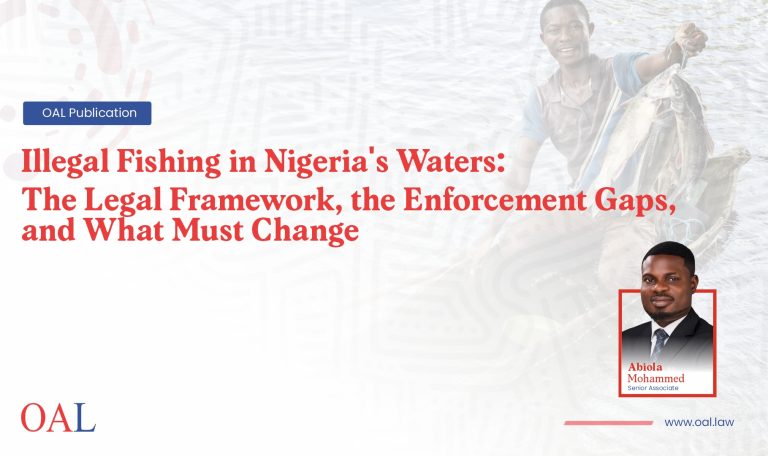
For most of the past decade, the Gulf of Guinea was regarded as one of the most dangerous maritime regions in the world. The region became synonymous with piracy, armed robbery at sea, vessel hijackings and the kidnapping of seafarers for ransom. Between 2010 and 2021, attacks on commercial shipping, offshore installations and energy infrastructure generated significant concern among coastal states, ship-owners and the international community. Incidents such as the attacks on the Curacao Trader in 2020 and the MV Mozart in 2021 underscored both the sophistication of pirate networks and the vulnerability of maritime trade routes within the region. — concerns that now extend to the growing challenge of illegal fishing in Nigeria’s waters and across the Gulf of Guinea [1]
The response to this growing insecurity was equally significant. Coastal states, supported by regional and international partners, strengthened naval patrols, enhanced maritime domain awareness, improved information-sharing mechanisms and operationalised the Yaoundé Architecture for Maritime Security Cooperation. Nigeria further reinforced its legal framework through the enactment of the Suppression of Piracy and Other Maritime Offences (SPOMO) Act 2019.[2] The combined effect of these initiatives has been measurable. According to the International Maritime Bureau, incidents of piracy and armed robbery in the Gulf of Guinea have declined considerably from the levels recorded between 2018 and 2021.[3]
While this decline is encouraging, it does not necessarily indicate a reduction in maritime insecurity. Rather, it reflects a transformation in the nature of maritime threats. As piracy became increasingly risky and less profitable due to improved enforcement, criminal activity appears to have shifted towards less visible but highly lucrative forms of maritime exploitation. One of the most significant manifestations of this shift is the rise of Illegal, Unreported and Unregulated (IUU) fishing.[4]
IUU fishing encompasses fishing activities conducted in violation of national fisheries laws, regional conservation measures and international regulatory frameworks. It includes unauthorised fishing within a coastal state’s Exclusive Economic Zone (EEZ), inaccurate or absent catch reporting, and fishing operations that fall outside effective regulatory oversight. Internationally, the principal legal instruments addressing IUU fishing include the United Nations Convention on the Law of the Sea (UNCLOS) and the Food and Agriculture Organisation’s International Plan of Action to Prevent, Deter and Eliminate Illegal, Unreported and Unregulated Fishing (IPOA-IUU).[5] Under Article 56 of UNCLOS, coastal states enjoy sovereign rights for the exploration, exploitation, conservation and management of living marine resources within their EEZs, while Articles 61, 62 and 73 impose obligations concerning conservation and confer enforcement powers against offending vessels.[6]
Historically, illegal fishing was viewed largely as a fisheries management concern. However, the scale and impact of IUU fishing in the Gulf of Guinea have elevated it into a broader maritime security issue. The threat extends beyond environmental degradation to encompass economic losses, food insecurity, social instability and the facilitation of organised criminal activity. International organisations and maritime security experts increasingly recognise the close relationship between IUU fishing and other forms of transnational crime, including corruption, document fraud, labour exploitation and illicit financial flows.[7]
The Food and Agriculture Organisation (FAO) estimates illegal fishing costs billions of dollars globally each year — and West African states absorb a disproportionate share of those losses.[8] Across the Gulf of Guinea, coastal states lose substantial revenue through the illegal harvesting of marine resources, depriving governments of licensing fees and taxation income while undermining the sustainability of fisheries stocks. The depletion of fish populations also threatens food security in a region where fish remains a primary source of protein for millions of people. In addition, declining fish stocks place immense pressure on artisanal fishing communities whose livelihoods depend on access to sustainable marine resources.
In Nigeria, illegal industrial trawling and unauthorised fishing activities continue to exert pressure on fish stocks and coastal communities. Although agencies such as the Nigerian Maritime Administration and Safety Agency (NIMASA), the Nigerian Navy and the Federal Department of Fisheries play critical enforcement roles, the vastness of Nigeria’s maritime domain and resource constraints continue to present significant challenges. Ghana faces a particularly acute problem through the practice known as “saiko”, whereby industrial trawlers illegally transfer catches at sea to local canoe operators, circumventing regulatory controls and fisheries management measures. This practice has contributed significantly to the depletion of small pelagic fish stocks – one of the most pressing fisheries governance issues in the country.[9] Smaller coastal states such as Benin Republic and Togo face similar difficulties, with limited surveillance capabilities and enforcement resources enabling illegal fishing vessels to exploit jurisdictional gaps and move across maritime boundaries with relative ease.
A notable feature of IUU fishing in the region is the involvement of distant-water fishing fleets operating through opaque corporate structures and flags of convenience. These arrangements often conceal the beneficial ownership of vessels, making it difficult for authorities to identify the ultimate beneficiaries of illegal activities. Weak monitoring and surveillance systems, inconsistent licensing enforcement and inadequate sanctions further complicate enforcement efforts. Consequently, while authorities may identify vessels involved in illegal operations, tracing accountability beyond operational actors frequently proves challenging.
Recognising these challenges, the international community has increasingly adopted legal and policy measures aimed at addressing the root causes of IUU fishing. Beyond UNCLOS, the FAO Port State Measures Agreement (PSMA) represents a significant enforcement mechanism by targeting access to ports and markets rather than focusing solely on activities at sea. By denying port access and landing rights to vessels engaged in illegal fishing, the Agreement seeks to prevent illegally harvested fish from entering legitimate supply chains.[10] Similarly, the World Trade Organisation’s Agreement on Fisheries Subsidies, adopted in 2022, seeks to curb subsidies that contribute to overcapacity, overfishing and IUU fishing, thereby addressing some of the economic incentives that sustain illegal operations.[11]
Despite the existence of these legal frameworks, enforcement remains constrained by institutional and operational shortcomings. Maritime security architecture across the region remains heavily focused on counter-piracy operations, often leaving fisheries enforcement comparatively under-resourced. Fisheries regulators and maritime security agencies rarely coordinate effectively, and the patchwork of licensing regimes, penalties and enforcement standards across neighbouring states creates exploitable gaps. Corruption within licensing, inspection and fisheries management processes further undermines deterrence and weakens the effectiveness of enforcement efforts.
The evolving threat landscape in the Gulf of Guinea demonstrates that maritime insecurity has not disappeared; it has merely changed form. While coordinated naval and legislative interventions have succeeded in reducing piracy and armed robbery at sea, IUU fishing has emerged as a more enduring and economically damaging challenge. Addressing this threat requires a fundamental shift from a piracy-centric approach to a broader maritime governance framework that integrates maritime security, fisheries management, beneficial ownership transparency, intelligence sharing and regional enforcement cooperation.
Only through such a comprehensive strategy can Gulf of Guinea states effectively protect their marine resources, strengthen economic sovereignty and secure the long-term sustainability of the region’s maritime domain.
References
[1] Stable Seas, Maritime Security in the Gulf of Guinea: A Decade of Piracy Data (2010–2020) (Stable Seas Report 2021)
[2] Suppression of Piracy and Other Maritime Offences Act 2019, Laws of the Federation of Nigeria.
[3] International Maritime Bureau, Piracy and Armed Robbery Against Ships: Annual Report 2025 (ICC-IMB 2026).
[4] United Nations Office on Drugs and Crime (UNODC), Transnational Organised Crime in the Fisheries Sector: Focus on the Gulf of Guinea (UNODC Research Brief 2024).
[5] United Nations Convention on the Law of the Sea (adopted 10 December 1982, entered into force 16 November 1994) 1833 UNTS 3, art 56; Food and Agriculture Organisation, International Plan of Action to Prevent, Deter and Eliminate Illegal, Unreported and Unregulated Fishing (FAO 2001).
[6] UNCLOS, arts 56, 61, 62 and 73.
[7] United Nations Office on Drugs and Crime (UNODC), Transnational Organised Crime in the Fisheries Sector: Focus on the Gulf of Guinea (UNODC Research Brief 2024).
[8] Food and Agriculture Organisation, the State of World Fisheries and Aquaculture 2024: Towards Blue Transformation (FAO 2024).
[9] Environmental Justice Foundation, the ‘Saiko’ Menace: How Illegal Transshipment is Devastating Ghana’s Fisheries (EJF Briefing 2023).
[10] Agreement on Port State Measures to Prevent, Deter and Eliminate Illegal, Unreported and Unregulated Fishing (adopted 22 November 2009, entered into force 5 June 2016).
[11] World Trade Organisation, Agreement on Fisheries Subsidies (adopted 17 June 2022, WT/MIN (22)/33).